Your curve over a native speaker's
Your average shape for each tone and tone pair, next to how it looked weeks or months ago.
Your voice flies a bird through tunnels shaped like each tone. You build muscle memory without it feeling like study.
Needs a microphone and a quiet room. Your voice stays on your device: no upload, no AI.
“Really cool. I have been here for three years and my tones are shit! This is really great.”
 r/taiwan
“Tone pairs are what I need most, 3-3 still gets me.”
 an early tester
“I can not continue studying Chinese without this app. I depend on it so much.”
 EarlyBird player, over email
mā, má, mǎ, mà trace four different pitch shapes. That is all a tone mark is.
See the shape as you speak and your voice learns to make it. Your ear soon follows.
Each tunnel is the tone of the word you hear, cut from a real recording of a native speaker. Pick a word to see its gate.
450+ recorded words in Traditional characters and Taiwan pronunciation, in TOCFL order, so the first words are the useful ones. A shape that differs from your textbook is a real accent, not a bug.
Jane is also the founder of Jane's Mandarin, where she helps heritage learners reconnect with their roots through Taiwanese Mandarin.
The bold line is the average. The faint lines are every real take.
Most tone practice is a chart and rules to memorize, and it doesn't stick. Watching your own voice trace the shape gives you the picture a textbook never does.
Say mǎ ten times and watch every try stack on the target shape. No score, no pressure.
Every run is saved, so you see which tones improve and which still need work.
Your average shape for each tone and tone pair, next to how it looked weeks or months ago.
Your hit rate for every tone and pair, over your last 5 runs, last 50 or all time.
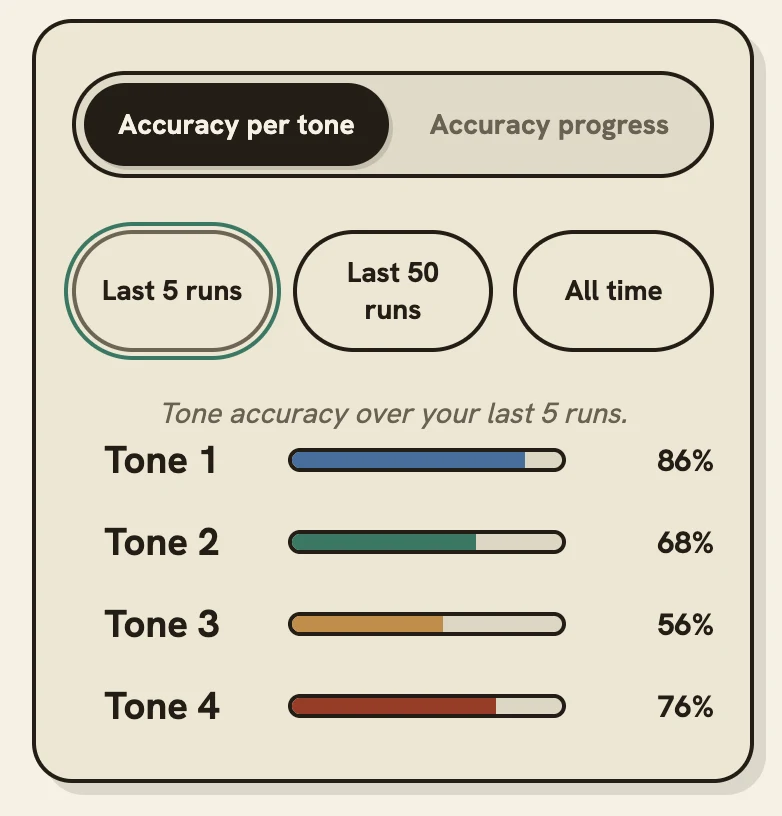
Your last 5 runs are free.
Accuracy for one tone or pair, day by day. Proof the practice works.
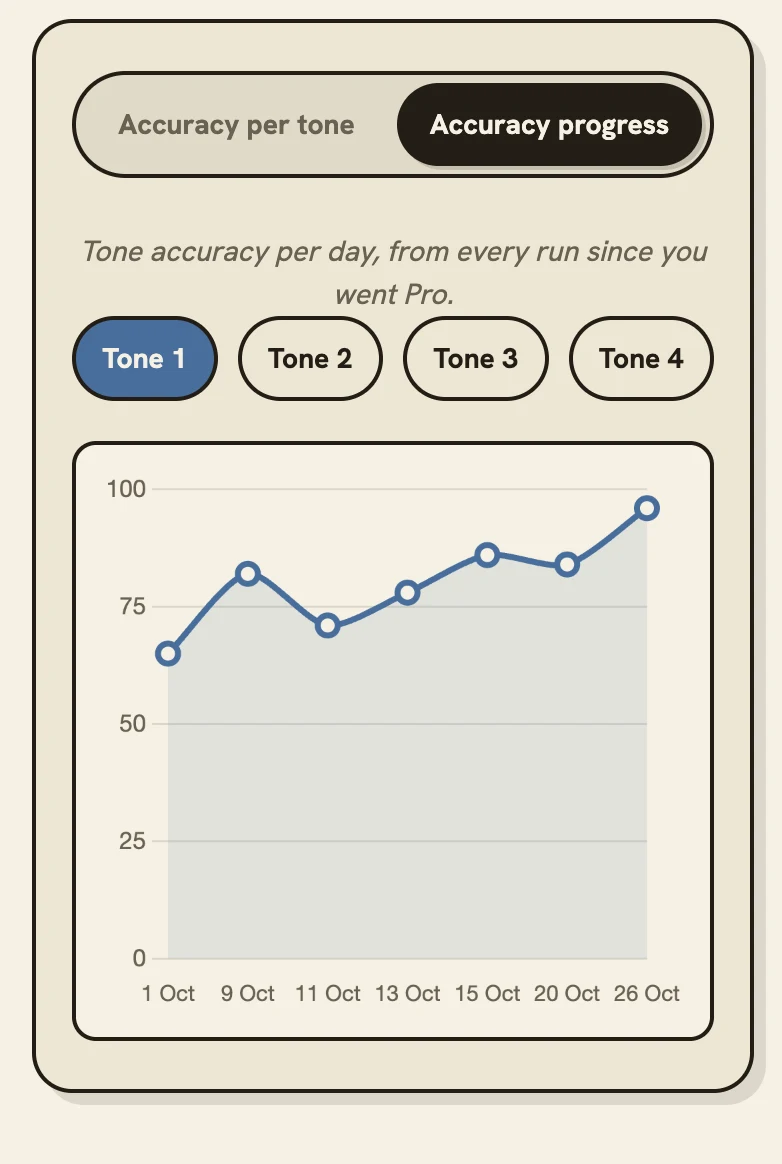
Once single tones feel easy, Tone Pairs flies two syllables at a time: 好玩, 以前 and 240+ more. Each corridor comes from the exact recording, sandhi and all.
Same voice-controlled bird, shaped around where you are with the tones.
Classic: A scored run of random words. Hearts, combos, and a difficulty that climbs.
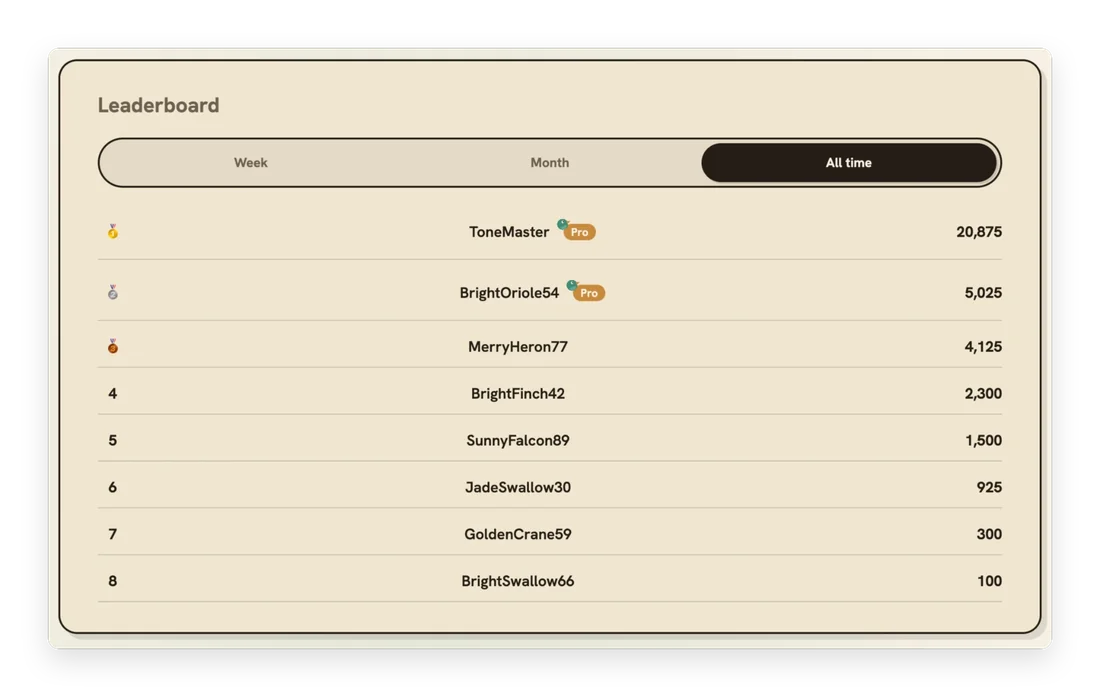
Sign up free and every run counts. This week, this month or all-time.
Pay once. No subscription.
450+ words, 240+ tone pairs, every TOCFL level.
No. It's built for muscle memory on the four tones, not fluency. Words are pronounced clearly and a bit exaggerated on purpose, that's what makes the shape learnable.
No generative AI anywhere. Your voice never leaves your device, it's just pitch-detection math running in the browser.
No. Words are picked using the TOCFL beginner lists because they're a good, real answer to what to learn first, not because this trains you for a test. This is about pronunciation, not certification.
That's the only accent recorded so far. Regional variation in tone contours is real, more accents are on the roadmap.
Real two-syllable words, not single syllables drilled in isolation. The corridor shape comes straight from the recording, sandhi included.
Yes, a free one, made in a few seconds with your email. It saves your progress across devices and gets you on the leaderboard. The tone test and tone visualizer need no account.
Native apps aren't out yet. They'll add offline play, reminders and a streak. Get told when they ship:
Only for FlappyTone updates. No spam, unsubscribe anytime.
Same effect as an app icon: full screen, no URL bar eating a fifth of the display.
I'm Pierre, and I'm learning Mandarin too.
I realised I learn far better with visuals than with audio alone, so I built a way to see the tones, not just hear them. Every word is recorded by a native speaker from Taiwan. Questions or ideas? Write to me.
pierre@pierrebuilds.dev